
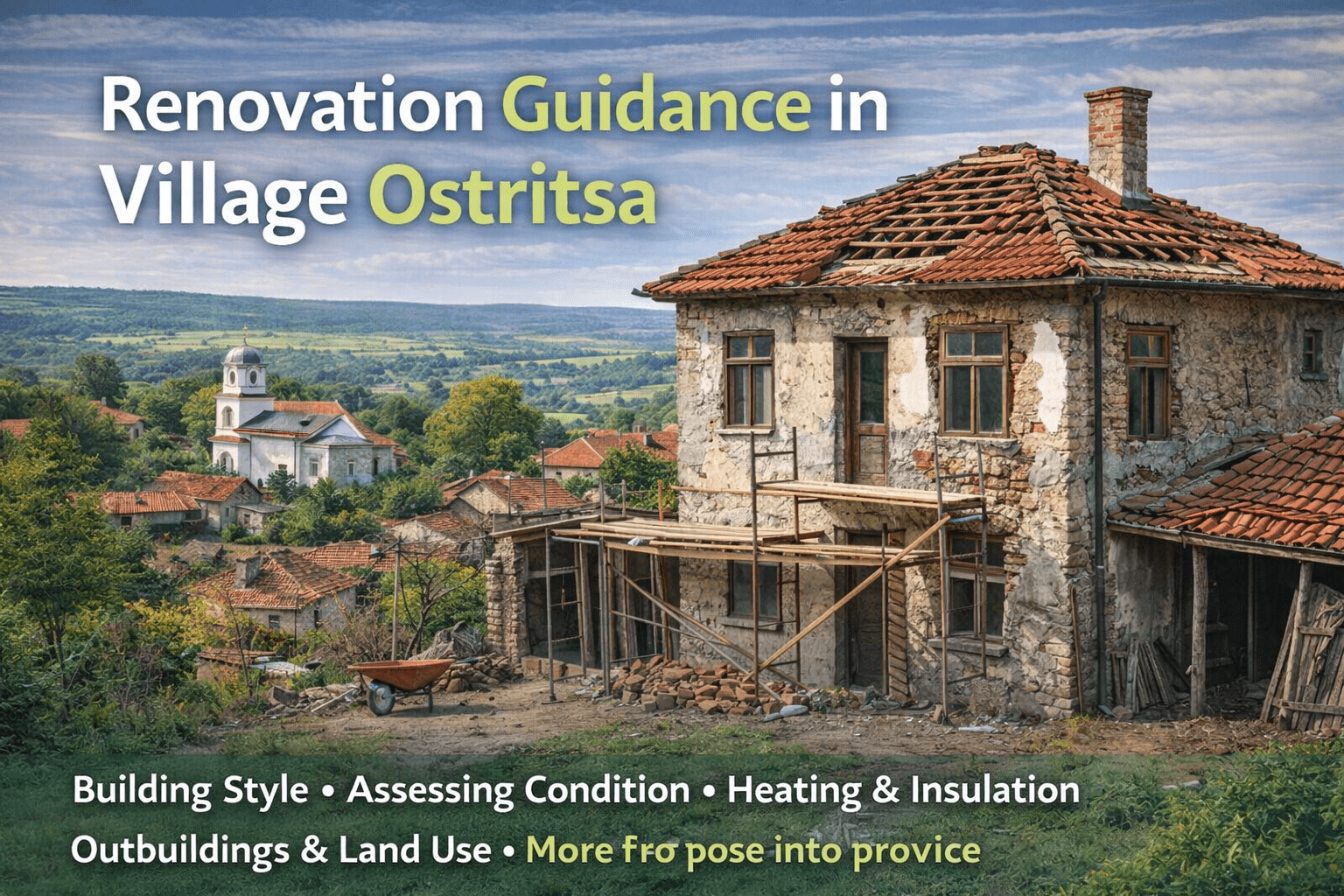
Renovation Guidance in Village Ostritsa
Renovating a Bulgarian property in village Ostritsa is a practical and achievable option for buyers who understand the realities of rural housing. Many homes in village Ostritsa were constructed decades ago using traditional materials and layouts designed for agricultural life rather than modern convenience. Generous land plots, outbuildings, and solid masonry walls are common features.
This guide explains what buyers can realistically expect when renovating in village Ostritsa, how to approach projects carefully, and how to avoid common and costly mistakes. The purpose is not to promote unrealistic transformations, but to support informed decisions that reflect genuine village conditions and long-term usability.
Understanding the Local Building Style in Village Ostritsa
Most houses in village Ostritsa are built from brick, stone, or mixed masonry construction. Foundations are often solid, and many older properties include stone cellars or semi-basements originally designed for food storage and temperature regulation. These structural elements frequently remain one of the strongest parts of the building.
Roofs are typically timber-framed and covered with clay tiles. While some roofs remain structurally stable, ageing timber, slipped tiles, or minor leaks are common. Roof condition should always be one of the first assessments when considering renovation in village Ostritsa.
Internal layouts often feature narrow corridors and smaller rooms. Insulation is usually limited. Reconfiguration may be part of a renovation plan, but structural walls must be assessed properly before alteration.
Assessing Property Condition Realistically
Successful renovation in village Ostritsa depends on accurate evaluation rather than optimism. Buyers must distinguish between cosmetic work and structural intervention.
Cosmetic upgrades may include plaster repairs, painting, flooring replacement, and kitchen or bathroom updates. These works improve comfort and presentation but do not change the building’s core condition.
More significant works can involve roof repair, full rewiring, plumbing replacement, drainage correction, or structural reinforcement. Many properties in village Ostritsa fall somewhere between light refurbishment and heavier structural improvement. A realistic inspection before purchase is essential for defining scope and cost.
Utilities and Infrastructure in Village Ostritsa
Older properties in village Ostritsa often have basic electrical systems that no longer meet modern safety standards. Rewiring is common and should be planned carefully to ensure compliance and reliability.
Water supply is usually available, but internal pipework may be outdated. Upgrading plumbing during renovation prevents future complications and allows integration of improved heating and sanitation systems.
Internet connectivity is increasingly important. Buyers planning long-term living in village Ostritsa should confirm available mobile or fixed broadband solutions early in the renovation process.
Heating and Insulation Considerations
Heating is one of the most important aspects of renovating a Bulgarian property in village Ostritsa. Traditional homes were heated locally using wood-burning stoves rather than central systems.
Modern renovations often include wood or pellet stoves, chimney restoration, partial central heating, or underfloor systems. Insulation improvements are critical. Roof insulation, wall treatment, and window replacement dramatically improve comfort and reduce long-term running costs.
Prioritising insulation over cosmetic finishes creates better long-term results in village Ostritsa property renovation projects.
Roofs, Drainage, and Moisture Control
Roof integrity directly affects the entire building. In many cases, roofs in village Ostritsa can be repaired rather than completely replaced, depending on timber condition.
Drainage around the property is equally important. Poor runoff leads to damp foundations and cellar moisture. Improvements such as gutter replacement, grading adjustment, and drainage channels significantly extend building lifespan.
Moisture control requires ventilation and breathable materials. Quick surface fixes rarely solve underlying issues in rural properties.
Outbuildings and Land Potential
Many properties in village Ostritsa include barns, annexes, and agricultural outbuildings. These vary in condition but often provide strong renovation potential.
Outbuildings can be adapted into workshops, guest accommodation, storage, garden kitchens, or utility spaces. Large plots allow phased development, meaning buyers can renovate the main house first and improve secondary structures later.
Land size in village Ostritsa is often one of the property’s strongest long-term advantages.
Permissions and Practical Regulations
Not all renovation work in village Ostritsa requires formal approval. However, structural alterations, extensions, or major modifications may require local permission.
Understanding this early prevents delays. Renovation projects handled transparently and correctly tend to proceed smoothly within the local administrative framework.
Phased Renovation Strategy in Village Ostritsa
A phased renovation approach is often the most sensible method when improving a Bulgarian property in village Ostritsa. Instead of attempting full transformation immediately, work can be structured over time.
Early phases should prioritise roof stability, structural safety, and essential utilities. Later stages can focus on insulation, interior finishes, landscaping, and external improvements.
This method reduces financial strain and allows homeowners to adapt plans based on real experience of living in the property.
Living On-Site During Renovation
Many buyers choose to live on-site while renovating in village Ostritsa. This is often possible if part of the house is habitable.
Living on-site allows closer supervision of work and gradual improvement. However, comfort may be limited during early stages. Proper planning ensures safety and manageable disruption.
Avoiding Common Renovation Mistakes
Common mistakes in village Ostritsa property renovation usually arise from unrealistic expectations rather than technical complexity.
Underestimating cost, ignoring insulation, choosing unsuitable materials, or prioritising appearance over durability are frequent issues. Successful renovation focuses on comfort, practicality, and suitability for rural life.
Long-Term Value of Renovating in Village Ostritsa
Renovation in village Ostritsa is rarely about rapid resale profit. Instead, value is created through usability, comfort, land potential, and structural stability.
Well-renovated homes remain attractive to buyers who appreciate rural living. Sensible improvements preserve flexibility and maintain broader appeal.
Renovation Support Through the bg.house Network
Properties connected to the bg.house network are presented with practical context to help buyers understand renovation scope before purchase. Guidance can assist with realistic assessment, phased planning, and understanding local construction norms.
Renovating a Bulgarian property in village Ostritsa suits buyers who value independence, gradual improvement, and long-term rural living. With realistic planning and measured expectations, renovation in village Ostritsa can provide lasting satisfaction and genuine lifestyle value.